Lovecraftian Horror in Video Games: Cosmic Dread and Unknown Horrors
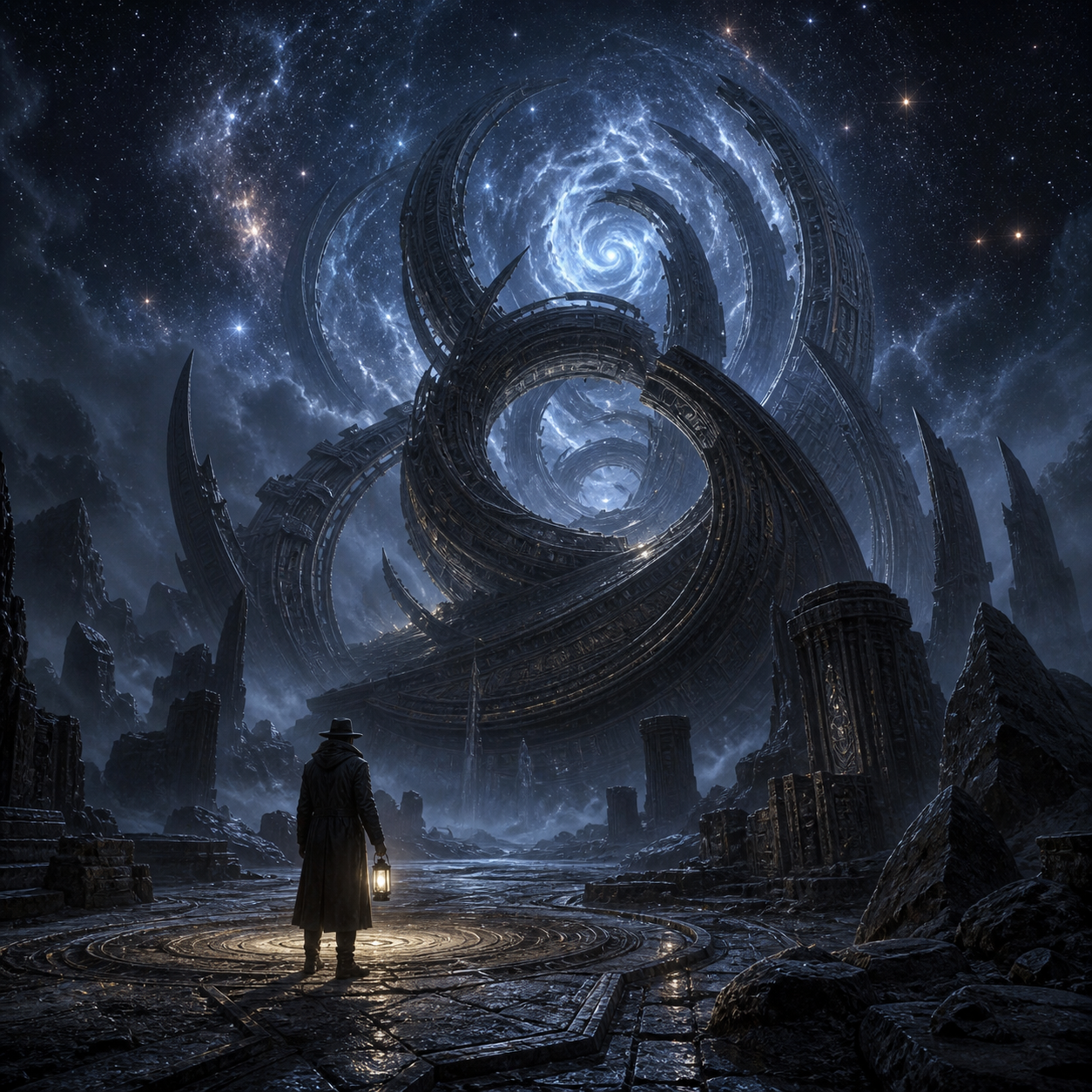
Lovecraftian horror in video games turns fear into a question with no safe answer: what exists beyond human understanding, and what happens when you look too closely? Rather than relying mainly on gore or jump scares, this form of cosmic horror builds cosmic dread through helplessness, forbidden knowledge, distorted reality, and threats that cannot be fully understood.
What Is Lovecraftian Horror in Video Games?
Lovecraftian horror in video games is horror centered on humanity’s insignificance before ancient, incomprehensible forces. It uses the player’s limited knowledge and vulnerability to create fear of the unknown, rather than presenting every monster as a problem that can be defeated.
The term draws inspiration from the fiction of H. P. Lovecraft, but a game does not need to adapt one of his stories to feel Lovecraftian. A bleak fishing village, an impossible ocean, a cult beneath a city, or a machine that reveals an alien dimension can all express the same central idea: reality is larger, stranger, and less human than people assume.
This separates cosmic horror from conventional supernatural horror. A ghost may have a recognizable motive, while an eldritch entity may not possess motives that human language can describe. A vampire can be hunted according to known rules; an unknowable force may alter space, memory, or causality simply by entering the world.
That distinction also affects player goals. In ordinary survival horror, survival often means learning the enemy’s pattern. In Lovecraftian horror, understanding the pattern may expose the character to existential fear. Knowledge becomes useful, but dangerous.
The Core Themes of Cosmic Dread
Cosmic dread comes from realizing that human life has little importance to forces operating on an incomprehensible scale. Lovecraftian horror combines existential fear, isolation, forbidden knowledge, insanity, and the collapse of familiar reality.
Human insignificance and existential fear
The protagonist may be brave, intelligent, or well equipped, yet those qualities do not guarantee control. The threat can be ancient enough to ignore civilization, powerful enough to reshape the environment, or abstract enough to make ordinary ideas of victory meaningless.
This is why a quiet observation can feel more frightening than a battle. Seeing a colossal shape move beneath the water suggests a scale the player cannot manage. The fear comes from recognizing that the character is not the center of the story.
Forbidden knowledge and psychological deterioration
Lovecraftian stories often make investigation morally and psychologically costly. Diaries, symbols, archaeological records, and ritual texts reveal fragments of a larger truth. Each discovery answers one question while creating several more.
Insanity and psychological deterioration can represent this pressure, but they do not need to appear as a literal sanity meter. A game might distort sound, alter descriptions, introduce unreliable visions, or make the interface contradict the world. These techniques communicate that the character’s perception is becoming unstable.
Isolation and the collapse of reality
Remote islands, abandoned hospitals, underground ruins, and villages cut off from the outside world are common settings because isolation removes reassurance. There is no ordinary society nearby to confirm what is real or offer practical help.
The most effective stories gradually damage familiar assumptions. A hallway becomes longer than the building should allow. A trusted map stops matching the environment. A repeated symbol appears in places that should be unrelated. The player begins to fear that the world itself has become an unreliable witness.
How Games Make the Unknown Feel Terrifying
Games make the unknown terrifying by controlling information rather than displaying every threat clearly. Limited visibility, incomplete explanations, environmental storytelling, and unsettling audio force players to imagine dangers beyond what the screen confirms.
Atmospheric game design usually works through several layers:
- Restricted information: darkness, fog, blocked paths, damaged records, and unreliable narration prevent complete certainty.
- Environmental storytelling: bloodless clues, abandoned equipment, strange architecture, and altered bodies imply events that the game never explains directly.
- Sound design: distant scraping, subsonic rumbles, reversed voices, and silence can signal a presence before the player sees anything.
- Pacing: long periods of investigation create anticipation, while sudden disturbances feel disruptive because they break an established rhythm.
- Visual contradiction: impossible geometry, shifting shadows, and objects that change position make the environment feel hostile to reason.
Good ambiguity differs from simple confusion. The player should have enough evidence to form theories, even if none can be proven completely. A symbol found in a chapel, a recurring phrase in several journals, and a creature reacting to a particular sound create a meaningful pattern. The game preserves mystery while respecting the player’s ability to interpret clues.
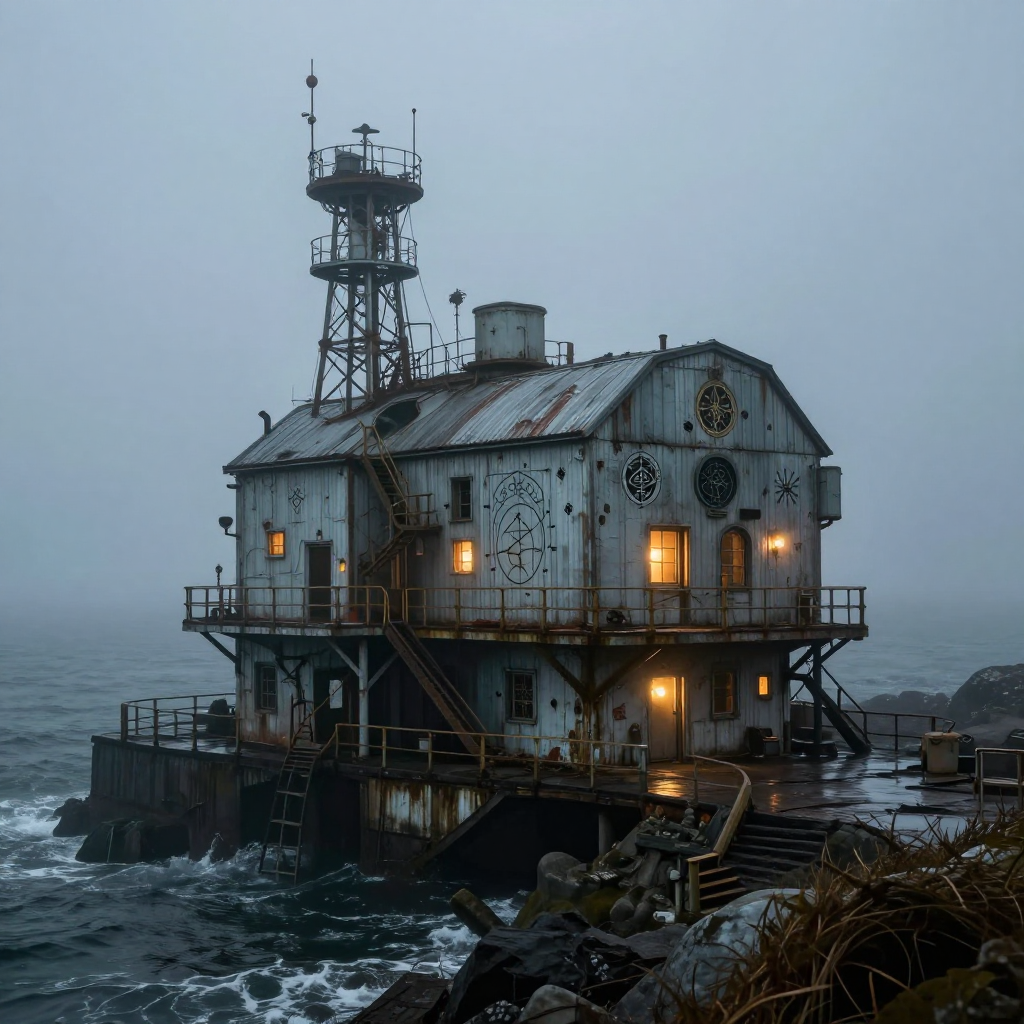
The strongest unknown horrors often remain partly unseen. Showing a creature’s entire anatomy can turn it into a familiar combat target. Showing its shadow, effects, or distorted reflection allows imagination to complete the threat.
Common Gameplay Mechanics in Lovecraftian Horror
Common Lovecraftian horror mechanics include exploration, scarce resources, investigation, limited combat, psychological stress, and choices that trade safety for knowledge. These systems work best when they reinforce the narrative instead of functioning as decorative genre features.
Exploration and investigation
Players usually uncover cosmic horror by examining spaces rather than following a purely linear path. Locked rooms, coded messages, unusual artifacts, and optional documents reward careful attention. The act of searching becomes risky because every discovery may reveal a larger threat.
Resource scarcity and limited combat
Scarce ammunition, unreliable weapons, fragile light sources, and restricted healing items make the player assess every confrontation. Combat limitations matter because an eldritch entity should not feel like an ordinary enemy with a large health bar.
Choosing vulnerability over constant combat has a trade-off. It can produce intense fear, but too much helplessness may make players feel that their decisions do not matter. Strong games give players narrow tools, escape routes, or partial ways to resist while preserving the sense that victory is never complete.
Sanity, stress, and perception systems
Some games use explicit sanity or stress mechanics. Others communicate psychological deterioration through unreliable perception, changing level design, or conflicting accounts from characters. Neither approach is automatically superior.
A visible meter offers clear feedback and strategic decisions, while a hidden system protects uncertainty. The key question is whether the mechanic changes how players behave. If losing sanity only applies a cosmetic filter, it adds little. If it changes navigation, sound cues, enemy behavior, or available choices, it becomes part of the horror’s meaning.
Choices involving dangerous knowledge
Cosmic horror can make information itself a resource. Reading a forbidden text may reveal a route but trigger a vision. Completing a ritual may save one character while opening a passage for something else. These choices create tension because the player cannot always separate progress from contamination.
Eldritch Entities, Cults, and Unfathomable Worlds
Eldritch entities, secret cults, ancient forces, and distorted locations give Lovecraftian horror its distinctive vocabulary, but their purpose is to express ideas about humanity’s fragile understanding of reality.
Strange creatures work best when their behavior suggests a different relationship with the world. An enemy that ignores doors, reacts to sound from impossible distances, or changes shape when observed feels more unsettling than a creature designed only to look grotesque.
Cults often provide a human bridge to the incomprehensible. They translate cosmic forces into rituals, symbols, and ambitions that players can recognize. Yet cultists should not explain everything. Their beliefs may be contradictory, their prophecies incomplete, and their leaders mistaken about the entities they worship.
Unfathomable worlds expand this uncertainty through setting. A familiar town may contain a geometry that belongs to another dimension. An ocean may hide a civilization that predates human history. A dream realm may obey emotional rather than physical rules. The location becomes an active source of cosmic dread.
Effective lore resists total explanation. The player can understand consequences without receiving a complete encyclopedia entry. That balance preserves mystery while making discoveries feel connected rather than random.
Why Lovecraftian Horror Works So Well in Video Games
Lovecraftian horror works especially well in video games because players personally navigate danger, make investigative choices, and experience uncertainty through interaction. The medium turns cosmic dread from a story concept into a problem the player must approach without enough information.
In a film, the audience watches a character enter a forbidden room. In a game, the player chooses whether to open the door, searches the desk, reads the document, and decides whether to continue after hearing something behind them. Player agency makes curiosity feel personal.
Interactive discovery also creates a useful contradiction. Players want to understand the world because understanding helps them play better, but the narrative warns that understanding may damage the character. That tension links gameplay and theme directly.
Immersion increases when interface and environment share the same uncertainty. A missing objective marker can make navigation frightening, provided the level offers meaningful visual cues. A distorted map can become a story event rather than a technical inconvenience. Even inventory design can support the mood if artifacts have unclear uses and unsettling descriptions.
There are limits. Ambiguity can frustrate players when clues lack consistency, and helplessness can become repetitive if the player has no meaningful choices. Cosmic horror needs structure beneath its uncertainty: reliable consequences, readable spaces, and enough agency to make fear feel earned.
What to Look For in a Lovecraftian Horror Game
To choose a Lovecraftian horror game, evaluate how it balances atmosphere, mystery, exploration, psychological tension, and action. The right choice depends on whether you want slow investigation, survival pressure, narrative ambiguity, or more direct combat.
- For atmosphere: look for deliberate lighting, layered sound design, environmental storytelling, and pacing that allows silence to work.
- For narrative: choose games with fragmented records, unreliable perspectives, meaningful symbols, and mysteries that do not require every answer to be explicit.
- For exploration: check whether optional areas and returning routes reveal new context rather than only extra supplies.
- For psychological tension: see whether stress or sanity mechanics affect perception, decisions, and level design instead of adding a simple visual effect.
- For action: determine whether combat preserves vulnerability. Powerful weapons and frequent upgrades may reduce cosmic dread if every entity becomes routine.
A practical way to judge a game is the three-part dread test: ask what the player knows, what the player can do, and what remains impossible to understand. If knowledge grows, tools remain limited, and the central threat still exceeds human explanation, the game is likely using cosmic horror rather than merely borrowing its imagery.
Frequently Asked Questions
What is Lovecraftian horror in video games?
Lovecraftian horror in video games focuses on unknowable forces, human insignificance, forbidden knowledge, and existential fear. Its horror comes from confronting a reality that cannot be fully understood or controlled.
How is cosmic horror different from traditional horror?
Traditional horror often centers on a recognizable threat that can be escaped, defeated, or explained. Cosmic horror emphasizes scale, uncertainty, and forces whose motives and rules exceed human comprehension.
Why is the unknown so important to Lovecraftian horror?
The unknown activates imagination and prevents the threat from becoming familiar. When a game reveals consequences without explaining everything, players must construct possibilities that may be more frightening than a clearly shown monster.
Do Lovecraftian horror games always include sanity mechanics?
No. A game can create psychological deterioration through sound, unreliable narration, distorted environments, and changing perceptions without using a visible sanity meter.
What gameplay features create cosmic dread?
Limited information, scarce resources, investigation, restricted combat, environmental storytelling, unsettling audio, ambiguous lore, and choices involving dangerous knowledge can all create cosmic dread when they support the game’s themes.